The Engineering Science Behind SIMIX® HVAC Cleaning & Ceramic Coating Systems

The Engineering Science Behind SIMIX® HVAC Cleaning & Ceramic Coating Systems

Why advanced chemistry and surface engineering translate into measurable energy, durability, and lifecycle gains

Introduction: When Surface Science Becomes an Energy Strategy

In commercial and institutional buildings, HVAC efficiency is rarely limited by design intent—it is limited by surface condition. Fouled coils, degraded heat-exchange surfaces, and recurring contamination quietly erode performance year after year, driving up kWh consumption, shortening equipment life, and increasing maintenance burden.

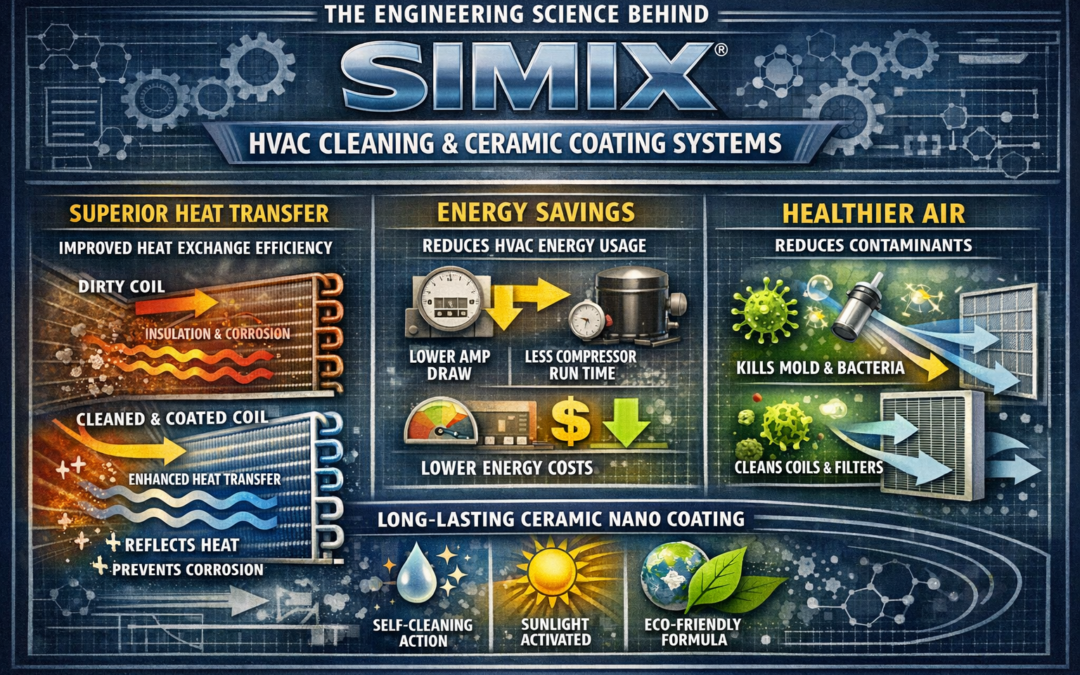
SIMIX Products address this problem at its root. Rather than treating cleaning and protection as separate, short-term maintenance tasks, SIMIX applies formulation chemistry, materials science, and heat-transfer engineering to create an integrated system: a high-efficacy cleaner/degreaser followed by a functional ceramic clearcoat engineered specifically for HVAC and industrial heat-exchange environments.

This article explains—without marketing fluff—how SIMIX products work, why they perform differently from conventional alternatives, and how their technical attributes translate into real-world operational advantages for engineers, facility managers, and informed buyers.

Understanding the Technical Foundation

HVAC Performance Is a Surface Chemistry Problem

Heat transfer in HVAC coils depends on three controllable factors:

  1. Surface cleanliness (absence of oils, biofilms, and particulate fouling)
  2. Surface energy and wettability (how condensate forms and evacuates)
  3. Thermal resistance at the air–metal interface

Traditional maintenance focuses almost exclusively on item #1—and even then, only temporarily. SIMIX products are engineered to address all three simultaneously.

The SIMIX Cleaning System: Chemistry With a Purpose

Advanced Oxidative & Surfactant Synergy

SIMIX cleaners are formulated using a controlled oxidative chemistry combined with engineered surfactant systems. This dual-action approach allows the cleaner to:

  • Break down hydrocarbon oils and greases
  • Disrupt biological films and organic residues
  • Lift and suspend particulate matter for complete removal

Unlike harsh acids or caustic cleaners, SIMIX formulations are designed to achieve high soil-removal efficiency without attacking base metals, coil fins, or protective factory coatings when applied as directed.

Why this matters:

Incomplete or aggressive cleaning leaves residues, etches fins, or accelerates corrosion—each of which increases long-term thermal resistance.

Residue-Free Rinsing and Surface Reset

A critical but often overlooked attribute of HVAC cleaners is post-clean surface condition.

SIMIX cleaners are engineered to rinse clean, leaving:

  • No sticky surfactant films
  • No ionic residues that attract airborne contaminants
  • A neutralized surface suitable for coating adhesion

This “surface reset” is essential for the next engineering step: functional coating application.

SIMIX Ceramic Clearcoat: Functional Surface Engineering

Thin-Film Ceramic Chemistry (Not a Cosmetic Coating)

The SIMIX Ceramic Clearcoat is not a cosmetic sealant. It is a thin, inorganic-organic hybrid ceramic layer designed to modify surface behavior at the microscopic level.

Key formulation characteristics include:

  • Extremely low film thickness (microns, not mils)
  • High adhesion to aluminum, copper, and steel substrates
  • Non-insulating ceramic matrix that avoids thermal penalty

Based on industry-standard thin-film ceramic behavior, coatings at this thickness do not measurably impede heat transfer when properly applied.

Surface Energy Modification & Condensate Dynamics

One of the most important—and least understood—benefits of SIMIX ceramic technology is surface energy control.

By altering the surface’s wettability characteristics, the clearcoat encourages:

  • Rapid condensate shedding instead of film pooling
  • Reduced water retention on fins
  • Faster evaporation and drainage cycles

Engineering impact:
Standing moisture acts as both a thermal barrier and a medium for biological growth. Improving condensate behavior directly supports better heat exchange and indoor air quality (IAQ).

Corrosion Resistance Without Thermal Trade-Offs

Conventional corrosion protection often relies on thick polymeric barriers that:

  • Trap dirt
  • Reduce fin efficiency
  • Require reapplication after degradation

SIMIX’s ceramic clearcoat provides passive corrosion resistance by:

  • Limiting oxygen and moisture interaction at the metal surface
  • Stabilizing the substrate against chemical attack
  • Maintaining thermal conductivity due to ultra-thin application
Engineering Performance & Real-World Benefits

From Chemistry to Measurable Outcomes

When SIMIX cleaning and ceramic coating systems are applied together, facilities typically observe benefits across four performance domains.

  1. Sustained Heat-Transfer Efficiency
  • Cleaner coil surfaces = lower air-side thermal resistance
  • Improved condensate shedding = reduced latent load penalty
  • Stable surface condition = slower performance degradation over time

While exact kWh savings vary by climate, load profile, and baseline condition, sustained efficiency—not just short-term recovery—is the differentiator.

  1. Reduced Maintenance Frequency

SIMIX-treated surfaces resist:

  • Oil re-adhesion
  • Particulate binding
  • Biofilm anchoring

This means coils stay cleaner longer, reducing:

  • Labor hours
  • Chemical usage
  • Coil damage from aggressive repeated cleanings
  1. Extended Equipment Service Life

By mitigating corrosion, fouling, and thermal stress, SIMIX systems help:

  • Preserve fin integrity
  • Maintain airflow geometry
  • Reduce compressor and fan cycling stress

From an engineering economics perspective, life extension often outweighs energy savings alone.


  1. Improved IAQ & Moisture Control

Cleaner, faster-draining coils reduce:

  • Mold-supporting conditions
  • Microbial growth potential
  • Odor and contamination risk in air handlers

This is particularly relevant in schools, healthcare facilities, and data-sensitive environments.

Why SIMIX Products Outperform Conventional Alternatives
A Systems Approach, Not a Commodity Chemical
Most HVAC chemicals fall into one of two categories:
  • Aggressive cleaners that solve today’s problem while creating tomorrow’s damage
  • Protective coatings that insulate or fail prematurely

SIMIX integrates both functions into a chemically compatible system designed from the start for HVAC heat-transfer physics.

Comparative Advantages at a Glance

SIMIX vs. Typical Alternatives

  • Cleaner Chemistry
    • SIMIX: Controlled oxidative + surfactant balance
    • Conventional: Acidic or high-alkaline single-mode attack
  • Surface Outcome
    • SIMIX: Neutral, residue-free, coating-ready
    • Conventional: Residual films or etched substrates
  • Coating Function
    • SIMIX: Ultra-thin, functional ceramic layer
    • Conventional: Thick polymeric or cosmetic coatings
  • Lifecycle Economics
    • SIMIX: OPEX-friendly with compounding benefits
    • Conventional: Repeated labor and chemical cost cycles
Validation & Credibility

SIMIX performance claims are framed within:

  • Established heat-transfer and surface science principles
  • Industry-standard cleaning and coating behaviors
  • Field-observed outcomes across commercial HVAC applications

Where site-specific performance data exists, results should always be evaluated in the context of baseline condition, climate, and operational profile.

Cost–Benefit Perspective for Technical Buyers

For procurement specialists and financial stakeholders, SIMIX offers a compelling cost-to-value ratio:

  • Energy savings accumulate monthly
  • Maintenance reductions lower annual OPEX
  • Equipment life extension defers capital replacement
  • Improved IAQ reduces downstream risk

Importantly, SIMIX systems are typically treated as operational expenses rather than capital retrofits—simplifying approval pathways.

Conclusion

SIMIX products demonstrate what happens when chemistry, materials science, and HVAC engineering are aligned toward a single goal: sustained system efficiency.

Rather than chasing short-lived cleanliness or cosmetic protection, SIMIX addresses the root causes of HVAC performance degradation—at the surface level, where physics actually occurs.

For facilities seeking durable efficiency—not just temporary improvement—SIMIX represents a technically grounded, system-level solution worth serious consideration.
SIMIX for Building Envelopes: Clean, Protect, and Extend the Life of Exterior Surfaces

SIMIX for Building Envelopes: Clean, Protect, and Extend the Life of Exterior Surfaces

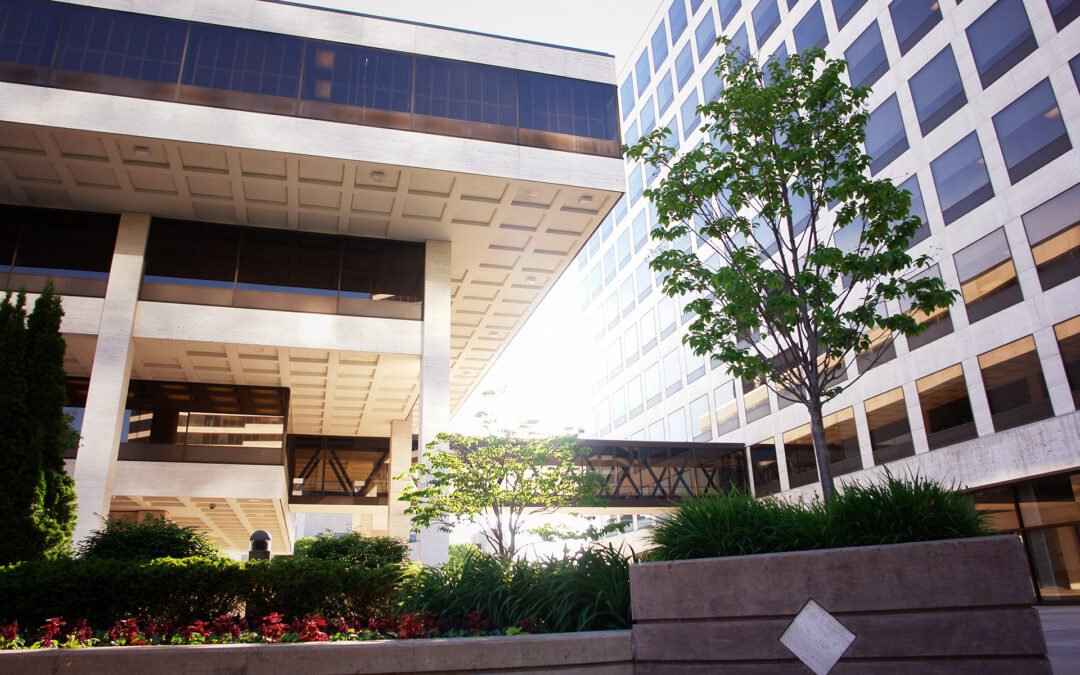
Your building envelope is its first line of defense against weather, UV exposure, airborne contaminants, and moisture intrusion. When exterior surfaces are neglected—or “protected” with the wrong prep and coating approach—small issues can escalate into water infiltration, freeze-thaw damage, premature roof aging, staining, and expensive repairs.

SIMIX surface cleaning and coating solutions are designed to work as a system: first restoring the substrate by removing performance-robbing contaminants, then adding a protective layer that helps the envelope shed water, resist soiling, and maintain appearance. This article explains how those surface-cleaning and coating properties translate into practical building-envelope advantages for architects, contractors, engineers, and property managers.

What SIMIX Products Are and Why Surface Chemistry Matters

At the building-envelope level, performance is often decided at the surface: what’s sticking to it, how porous it is, and how it interacts with water, salts, pollutants, and UV. SIMIX products—positioned as advanced surface treatment solutions—fit into two core categories used in envelope maintenance and protection:

SIMIX cleaning solutions

SIMIX cleaners are formulated to remove the contaminants that interfere with envelope performance and adhesion of subsequent protective layers. In realistic building-envelope use, that typically includes:

  • Oily films and atmospheric grime (traffic soot, exhaust, industrial fallout)
  • Bio-growth and organic staining (algae, mildew)
  • Construction residue and embedded dirt
  • Light mineral deposits and streaking (where compatible with the substrate)

Key assumption (stated): SIMIX cleaners are designed for exterior-compatible cleaning with a focus on effective soil removal while being appropriate for common envelope substrates when used per label directions (test patches, dwell time control, rinsing/neutralization as required).

SIMIX protective coatings

SIMIX coatings are described as ceramic or high-performance clear protective layers intended to reduce surface energy and provide a durable, weathering-resistant barrier. In building-envelope terms, coatings typically aim to:

  • Limit water absorption and staining on porous surfaces
  • Reduce adhesion of dirt and pollutants (easier cleaning)
  • Provide UV and weathering resistance
  • Maintain a consistent appearance while preserving substrate texture

Key assumption (stated): A properly applied SIMIX coating system typically provides multi-year outdoor durability—often 3–7 years depending on substrate porosity, exposure severity, and cleaning frequency—before maintenance reapplication is needed.

Surface Cleaning Capabilities and Why They Matter for the Envelope

Cleaning isn’t cosmetic; it’s a functional step that affects water behavior, coating bond, and long-term durability. Exterior surfaces collect films that can trap moisture or create uneven wetting, accelerate staining, and undermine coatings.

What “effective cleaning” looks like in envelope work

On facades, walls, and roofs, ideal cleaning achieves two outcomes:

  1. Removal of adhesion inhibitors
    Oils, traffic film, chalky oxidation, and biofilms can prevent coatings from wetting out and bonding evenly. Even small remaining patches can become weak points where water and dirt re-accumulate quickly.
  2. Uniform surface energy and porosity exposure
    A cleaned surface behaves more predictably: coatings spread consistently, cure evenly, and deliver a uniform hydrophobic effect (where designed).

Practical benefits of SIMIX-style cleaning (in realistic terms)

When an exterior cleaning product is paired with correct dwell time, agitation where appropriate, and thorough rinsing, building teams typically see:

  • Removal of organic buildup and grime that drives staining and discoloration
  • Improved appearance without aggressive abrasion that can open pores or damage coatings already in place
  • Better coating performance because the substrate is properly prepared (clean, dry, and compatible)
  • Reduced risk of premature coating failure (peeling, patchiness, uneven sheen) caused by poor prep

Helpful checklist for crews (best-practice oriented):

  • Always perform a test area to confirm compatibility and results
  • Control dwell time; don’t allow cleaners to dry on the surface
  • Use the least aggressive method that achieves the result (avoid unnecessary abrasion)
  • Rinse thoroughly and allow full dry-back before coating
  • Protect adjacent materials (glass, metals, landscaping) per standard site practice

Coating Properties That Help Protect the Building Envelope

The value of a coating on the building envelope isn’t simply “a layer on top.” It’s how that layer changes surface interaction with water, pollutants, and UV—and how long it continues doing so.

Water repellency and moisture management

Many envelope substrates are porous (masonry, concrete, some architectural stone). Water intrusion and retention are common precursors to spalling, efflorescence, corrosion of embedded metals, and freeze-thaw cracking in cold climates.

A high-quality protective coating commonly helps by:

  • Reducing capillary water uptake on porous materials (less saturation)
  • Encouraging water beading and runoff (less dwell time)
  • Lowering the chance of stain transport (dirt and tannins carried by water)

Important boundary: A surface coating is not a substitute for correct flashing, drainage planes, or code-compliant water-resistive barriers. It is a complementary surface protection layer, not the primary waterproofing system.

UV and weathering resistance

Exterior surfaces degrade under UV and weather cycles. Coatings intended for outdoor use typically aim to:

  • Slow surface oxidation and chalking (on compatible substrates)
  • Reduce fading and maintain appearance longer
  • Maintain hydrophobicity through repeated wet/dry cycles

Reasonable assumption: For most “ceramic-like” protective coatings used outdoors, performance longevity is strongly tied to exposure. South-facing elevations, coastal salt, and high-pollution zones shorten recoat cycles compared to sheltered or shaded areas.

Reduced soiling and easier maintenance

Lower surface energy generally means dirt and pollutants have less “grip,” especially when combined with a smooth cured film. Over time, this can translate into:

  • Less frequent pressure washing
  • Fewer harsh cleaning chemicals needed
  • Faster routine cleaning (water rinse and mild detergent more often suffices)

Where this matters most: light-colored facades, canopies, entry surrounds, and architectural elements that show streaking.

Real-World Building Envelope Applications

Below are realistic, representative scenarios illustrating how SIMIX cleaning + coating workflows can be used on common envelope components. These are generalized examples—not lab claims—and results depend on substrate condition, prep quality, and exposure.

Case example 1: Multi-tenant retail facade with persistent staining

Problem: A retail center’s EIFS and painted masonry show dark streaking from runoff, airborne grime, and algae on shaded elevations. Tenants complain about appearance, and the owner wants a longer interval between cleanings.

Approach:

  1. Apply SIMIX cleaner in controlled sections, ensuring proper dwell and rinse
  2. Confirm uniform appearance and remove remaining biofilm
  3. After dry-back, apply SIMIX protective coating to approved surfaces

Outcome (typical):

  • Streaking reappears more slowly
  • Annual cleaning becomes a quick wash rather than aggressive restoration
  • The facade maintains a more consistent appearance through the season

Case example 2: Masonry institutional building in freeze-thaw climate

Problem: Absorptive masonry shows recurring efflorescence and damp staining near parapets and wind-driven rain zones. The building team has addressed flashing, but wants added surface-level protection to reduce saturation.

Approach:

  1. Cleaning to remove salts and surface contaminants (as compatible with the masonry)
  2. Apply protective coating designed to reduce water uptake while maintaining breathability (where specified)

Outcome (typical):

  • Reduced water absorption and fewer damp-stain episodes
  • Less frequent efflorescence cleaning
  • Lower risk of freeze-thaw stress from repeated saturation (as part of a broader maintenance plan)

Case example 3: Metal panel and architectural trim in high-pollution corridor

Problem: A mid-rise near a highway accumulates oily traffic film that makes panels look dull and increases cleaning labor.

Approach:

  1. Degreasing/cleaning step to remove traffic film
  2. Apply a compatible protective coating to reduce pollutant adhesion

Outcome (typical):

  • Faster washdowns with lower chemical intensity
  • Improved appearance retention between cleaning cycles
  • Reduced labor hours for facade maintenance

Key Performance Advantages for Owners and Specifiers

The best envelope products win not only on performance, but on predictability: repeatable results, manageable maintenance, and reduced lifecycle cost surprises.

Durability and longevity (what to expect)

When cleaning and coating are treated as a system—and applied under the right environmental conditions—teams typically gain:

  • Multi-year protection before reapplication is needed (commonly 3–7 years, depending on exposure and substrate)
  • Slower return of staining and biological growth in problem areas
  • Greater consistency of appearance across elevations

Maintenance reduction and operational benefits

A well-performing surface protection system can shift maintenance from reactive restoration to planned light cleaning:

  • Fewer “deep-clean” mobilizations
  • Less aggressive pressure washing (reducing risk of substrate damage)
  • Easier budgeting and scheduling for property teams

Specification and best-practice alignment

For architects and engineers, surface systems are easier to justify when they align with standard best practices:

  • Proper substrate preparation and cleanliness verification
  • Compatibility testing (test patches)
  • Environmental condition controls (temperature, humidity, rain window)
  • Documented application methods and maintenance guidance

Where SIMIX fits best: As part of an envelope care plan—paired with routine inspections, prompt sealant repairs, and moisture management details—rather than as a cure-all for underlying building science issues.

Implementation Tips for Successful Results

A surface system is only as good as the installation. To improve reliability on real projects:

  • Start with substrate identification: masonry, EIFS, metal, coated surfaces, architectural concrete, stone
  • Use a test area: validate appearance, water behavior, and any sheen change
  • Confirm moisture conditions: coating too soon over damp substrates can reduce performance
  • Document the process: dilution ratios, dwell time, rinse method, application conditions
  • Define maintenance: set expectations for periodic washdowns and recoat intervals

Closing Takeaways: A Smarter Way to Protect the Envelope

The building envelope is where aesthetics, durability, and risk management meet. SIMIX’s surface-cleaning and coating approach addresses two of the most controllable factors in envelope performance: what’s on the surface and how the surface behaves over time. Cleaning removes the contaminants that undermine durability and adhesion. Coating adds a protective layer that can reduce water uptake, resist soiling, and extend maintenance intervals.

If you manage, specify, or maintain building exteriors, consider evaluating SIMIX with a small pilot area on one representative elevation. A controlled test patch—cleaned, coated, and monitored through a season—can quickly show whether the system delivers meaningful maintenance reduction and appearance retention for your specific substrate and climate.

Why Grease Is the Hidden Enemy of Restaurant Floors—and How SIMIX Solves It

Why Grease Is the Hidden Enemy of Restaurant Floors—and How SIMIX Solves It

How SIMIX Solves the Grease Problem at the Source

SIMIX approaches restaurant floor safety and cleanliness differently—by targeting grease at the molecular level instead of just masking it.

SIMIX Cleaner & Degreaser: Designed for Real Kitchen Conditions

SIMIX Cleaner & Degreaser is engineered to:

  • Break down grease films, not just loosen surface dirt
  • Lift embedded oils from pores and grout, where slip hazards begin
  • Rinse clean without leaving residue, improving traction and appearance

Instead of spreading grease thinly across the floor, SIMIX removes it—helping floors stay cleaner and safer longer.

What Restaurants Notice After Switching to SIMIX

Restaurants that adopt SIMIX into their cleaning programs often report:

  • Improved floor traction, especially near fry stations and dish areas
  • Cleaner-looking floors that stay clean longer
  • Less time spent re-cleaning problem zones
  • More consistent results across shifts and staff

Because grease is fully removed, routine mopping becomes more effective instead of fighting buildup left behind by previous cleanings.

Fits Real-World Restaurant Operations

A cleaning product only works if it fits how restaurants actually operate. SIMIX supports:

  • Fast training and simple procedures
  • Use with mops, auto-scrubbers, and professional cleaning equipment
  • Repeatable results across day, night, and weekend crews

This makes it easier for managers to enforce standards and maintain consistency—even during peak service periods.

Beyond the Kitchen: Whole-Facility Impact

Grease doesn’t stay confined to the cooking line. SIMIX helps control grease migration across:

  • Back-of-house corridors
  • Walk-ins and storage areas
  • Service entrances and delivery zones
  • Transition areas between kitchen and dining spaces

By stopping grease at the source, restaurants protect the entire facility—not just the obvious hotspots.

The Bottom Line: Remove Grease, Reduce Risk, Improve Operations

Grease is one of the most underestimated threats to restaurant floors. It hides in plain sight, undermines safety, and drives up labor and maintenance costs.

SIMIX addresses the root of the problem by completely removing grease residue, not just covering it up. The result is:

  • Safer floors
  • Cleaner kitchens
  • More efficient cleaning routines
  • Reduced operational risk

For professional restaurants, that’s not just better cleaning—it’s smarter operations.

Looking to reduce slip risk and improve floor performance in your restaurant?

SIMIX delivers professional-grade solutions for the most demanding kitchen environments—day after day.

Cleaner Kitchens, Safer Floors, and Less Downtime

Cleaner Kitchens, Safer Floors, and Less Downtime

Cleaner Kitchens, Safer Floors, and Less Downtime — Built for the Most Demanding Requirements: SIMIX for Professional Restaurants:

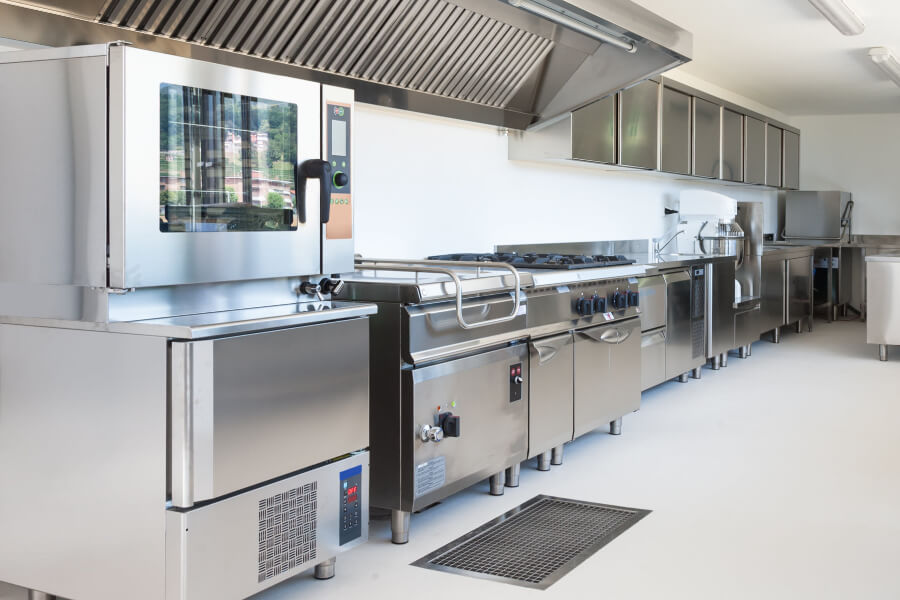
Professional kitchens don’t get “light use.” They get heat, grease, humidity, spills, heavy foot traffic, constant washdowns, and nonstop service pressure. Every surface—from tile and quarry floors to stainless prep areas and back-of-house corridors—has to perform under punishing conditions while meeting strict food-safety and sanitation requirements.

That’s where SIMIX products stand out. Designed for tough commercial environments, SIMIX helps restaurants achieve deep, reliable cleaning, safer walking and working surfaces, and lower maintenance burden—without disrupting operations.

Why Restaurants Need More Than “Basic” Cleaning Products

Most restaurant cleaning programs fail in one of three ways:

  • They clean the surface—but not the embedded contamination. Grease films, soil, and food residue can remain in pores and textured floors even after repeated mopping.
  • They solve one problem and create another. Strong chemicals can be harsh on surfaces, create unpleasant odors, or require extra rinsing and labor.
  • They demand too much time. If a product requires long dwell times, multiple passes, or complicated procedures, it simply won’t be used consistently during peak operations.

Restaurants need solutions that are fast, repeatable, scalable, and effective across multiple surfaces—especially in high-risk areas like kitchens, dish rooms, walk-ins, corridors, and service entrances.

SIMIX Cleaner & Degreaser: Commercial-Grade Cleaning That Keeps Up With Service

SIMIX Cleaner & Degreaser is built to attack the most stubborn restaurant challenges: grease buildup, soil loading, food residue, beverage spills, and traffic grime.

Key benefits for professional restaurants

  • Cuts through grease and grime quickly: Ideal for kitchens, dish areas, prep zones, and trash/utility spaces where grease migrates and clings.
  • Multi-surface capability: Simplifies purchasing and training by reducing the need for multiple specialty cleaners.
  • Supports consistent sanitation workflows: Works well in scheduled cleaning programs so teams can follow a repeatable standard across shifts.
What this means operationally
  • Less time re-cleaning the same spots
  • More predictable results across staff and shifts
  • Cleaner floors and surfaces that “stay clean longer” because residue is removed instead of smeared
Safer Floors, Fewer Slip Hazards, Better Customer and Staff Outcomes

Slip-and-fall risks aren’t theoretical in restaurants—they’re one of the most expensive and disruptive incidents you can face. Grease films and residue can turn flooring into a hazard, especially near fry stations, dish areas, entrances, and transition zones.

SIMIX helps address this at the root: remove the invisible film that reduces traction and makes floors difficult to maintain. When floors are thoroughly cleaned, restaurants often see:

  • Improved day-to-day floor appearance
  • Reduced “slick feel” in problem areas
  • Better results from routine mopping (because the mop isn’t fighting buildup)
Meet the Most Demanding Requirements: Speed, Consistency, and Professional Standards

Restaurant decision-makers care about results—but they also care about execution. SIMIX aligns with the most demanding operational requirements:

1) Fast training and simple repeatability

A product that’s easy to apply correctly will get used correctly. SIMIX helps teams follow a standard process across day and night crews.

2) Works with professional equipment

Restaurants commonly rely on:

  • mops and buckets for quick response
  • auto-scrubbers for dining areas and hallways
  • pressure washing for back docks and exterior zones

SIMIX fits into these real-world workflows so you’re not reinventing your cleaning program.

3) Better lifecycle maintenance

For restaurants, “clean” isn’t a one-time event—it’s daily repetition. SIMIX supports a maintenance approach that reduces the need for aggressive rework and deep-clean emergencies.

Beyond the Kitchen: Whole-Facility Benefits for Restaurant Operations

SIMIX isn’t only about kitchen floors. Professional restaurants gain value across the facility:

  • Front of house: cleaner floors with better appearance and fewer sticky areas
  • Restrooms: improved cleanliness and surface performance
  • Walk-ins and storage areas: better control of grime and tracked-in soil
  • Service corridors and delivery entrances: improved removal of heavy soil, oils, and traffic buildup

When your cleaning products perform everywhere, you simplify your supply chain, training, and consistency.

The Business Case: Reduce Labor Drag and Protect the Brand

Restaurant profitability is often won or lost in the small operational drags:

  • extra minutes spent re-mopping
  • repeated deep cleaning of the same areas
  • preventable accidents and complaints
  • inconsistent appearance across shifts

By improving cleaning effectiveness and supporting repeatable workflows, SIMIX can help restaurants:

  • reduce cleaning labor time
  • increase cleaning consistency
  • improve safety perception and compliance readiness
  • protect the guest experience and brand image
Recommended Implementation: A Practical SIMIX Restaurant Program

Here’s a simple program restaurants can adopt immediately:

Daily (High-Traffic Zones)

  • Spot clean spills and grease zones using SIMIX Cleaner & Degreaser as needed
  • Prioritize fry lines, dish area transitions, and entrances

Weekly

  • Full back-of-house floor cleaning with emphasis on grease migration zones
  • Detail corners, edges, and under-equipment zones where buildup starts

Monthly / Quarterly

  • Deep-clean schedule based on volume and layout
  • Use results as a benchmark (before/after photos help standardize expectations)
Conclusion: Professional Restaurants Need Professional Solutions

SIMIX products are designed for environments where “good enough” fails. For professional restaurants, the benefits are straightforward and measurable:

  • Cleaner kitchens and surfaces
  • Safer floors and reduced slip-risk conditions
  • Less maintenance burden and better consistency
  • A cleaning program that meets demanding operational and sanitation expectations

When restaurants choose SIMIX, they’re not just buying cleaning chemistry—they’re upgrading the reliability of their daily operations.

Ready to improve kitchen cleanliness, safety, and maintenance consistency?

Explore SIMIX solutions for professional restaurants and build a cleaning program that performs under pressure—day after day.

Why Restaurants Should Consider Using SIMIX Products

Why Restaurants Should Consider Using SIMIX Products

Why Restaurants Should Consider Using SIMIX Products

In the fast-paced world of food service, cleanliness isn’t just about aesthetics—it’s about safety, compliance, and your bottom line. Traditional cleaning chemicals are often caustic, expensive, and require a rotating door of specialized products for different surfaces.

Simix is changing the game with nano-engineered, high-pH solutions that simplify kitchen maintenance while drastically reducing costs. Here is why your restaurant should consider making the switch.

  1. Drastic Cost Savings

One of the most immediate impacts of switching to Simix is the reduction in your overhead. Most commercial cleaners are sold as "Ready-to-Use" liquids, meaning you are paying for water and plastic packaging.

  • Highly Concentrated: A single 5lb bag of Simix Multi-Surface Cleaner can make up to 136 gallons of heavy-duty degreaser or 544 spray bottles of sanitizer.
  • Price Per Gallon: While traditional degreasers can cost as much as $4.50 per gallon, Simix averages $0.08 to $0.48 per gallon, depending on concentration.
  • Consolidated Inventory: Simix replaces multiple products, including floor cleaners, window cleaners, sanitizers, and even laundry detergent for aprons and linens.
  1. Superior Grease Management and Drain Health

Grease is the natural enemy of any commercial kitchen. It leads to slippery floors, foul odors, and expensive plumbing bills.

  • Eliminate Hydrojetting: By mopping with Simix and pouring the remaining water down the drains, the high-pH formula emulsifies grease in the pipes. Many restaurant owners report they no longer need professional "hydrojetting" or snaking services.
  • Grease Trap Maintenance: Regular use of Simix keeps grease traps free-flowing and significantly reduces the putrid odors that can drift from the kitchen into the dining area.
  1. Enhanced Safety: Non-Slippery Floors

Slip-and-fall accidents are one of the leading causes of workers' comp claims in the industry. Traditional soap-based cleaners often leave a "tacky" film that becomes dangerously slick when wet.

  • High Traction: Simix removes the deep-seated grease and biofilm from tile and grout, leaving a surface that is "squeaky clean."
  • ANSI Certified: When used as a coating, Simix products are rated for high traction even when wet, providing a safer environment for your line cooks and servers.
  1. Continuous Sanitization with High pH

Bacteria and viruses (including E. coli, Salmonella, and Coronaviruses) typically thrive in environments with a pH between 4.8 and 9.2.

  • The "Never-Sleep" Clean: Simix maintains a permanent high pH (above 11) on surfaces. This creates a hostile environment for pathogens, meaning the surface continues to fight germs long after the cleaning crew has gone home.
  • Hospital-Grade Clean: In ATP meter testing (which measures live microbial matter), Simix often brings surfaces down to a reading of less than 10—a level considered sterile by hospital operating room standards.
  1. Better for Your Staff and the Planet

Harsh chemicals can cause respiratory issues and skin irritation for your employees.

  • Non-Toxic & Odorless: Simix is hypoallergenic, contains zero VOCs (Volatile Organic Compounds), and has no harsh fumes. Your staff won't need specialized PPE to use it for daily tasks.
  • Sustainability: By using concentrated powders, you eliminate hundreds of plastic bottles from landfills every year, significantly reducing your restaurant's carbon footprint.

The Bottom Line

Switching to Simix isn't just a change in soap; it’s a shift toward a more efficient, safer, and more profitable business model. You save money on chemicals, save time on labor, and protect your most valuable assets: your staff and your customers.

SMIX